Two New Convenient Locations in Cherry Hill and Mount Laurel

Laurie is happy to announce that she now has two new convenient locations to meet with clients. One is located in Cherry Hill and one in Mount Laurel. The addresses for the new locations are:

923 Haddonfield Road, Suite 300, Cherry Hill (near Route 70 in Garden State Park) and 309 Fellowship Road, East Gate Center, Mount Laurel (right near Route 73, 295, and NJ Turnpike).

Laurie plans on adding additional locations as she strives to make sure that she is accessible to her clients at locations convenient to their homes and workplaces.

Have You Been Served With a Restraining Order?

If you were recently served with a Restraining Order, that means that you may have been  removed from your home and that you have a hearing scheduled in the next few days. It is important to follow the terms of the Restraining Order exactly as they are written and to have no communication whatsoever with the other party while the Restraining Order is in effect. There are serious consequences and penalties for violating a Restraining Order and you must follow the Restraining Order when it is in effect. Otherwise, you may be arrested and face criminal charges for violating the Court Order.

The majority of people who file for Restraining Orders are victims of Domestic Violence who genuinely believe that they need the protection offered by the Restraining Order. However, on occasion, there are individuals who file seeking a Restraining Order because they are trying to obtain an advantage in the custody case or in the divorce. If this is true in your situation, it is important to contact an attorney  as soon as possible to discuss your possible defenses and legal options and to have sufficient time to prepare for the trial.

Meeting With Your Divorce Lawyer for the First Time

Once you make an appointment to meet with your divorce lawyer for the first time, you may be feeling anxious, emotional, or stressed during this difficult time in your life. The meeting itself should not add to your stress, which is why it is good to know what you should bring with you to the appointment and what you can expect at the meeting with your divorce lawyer.

The types of paperwork that you should bring with you to your meeting include the following: three recent paystubs for you and your spouse (if available to you), most recent tax return, recent retirement account statement for you and your spouse, recent bank statements from any bank accounts that you or your spouse have, recent credit card statements for you and your spouse, Social Security annual statements for you and your spouse, and recent receipts for childcare or private school tuition for your children. You can bring as many of these documents to the meeting as you can because they will help the lawyer understand your family’s financial situation at this time.

At the first meeting with your divorce lawyer, you can expect the attorney to ask you questions about your marriage, your children, your current living situation, and your family’s income, assets, and debts. The lawyer should provide you with your legal options and explain an overview of the divorce process to you, and you should feel comfortable talking to your lawyer. Hopefully the first meeting will leave you feeling better because you will have a clear understanding of the divorce process and your legal options.
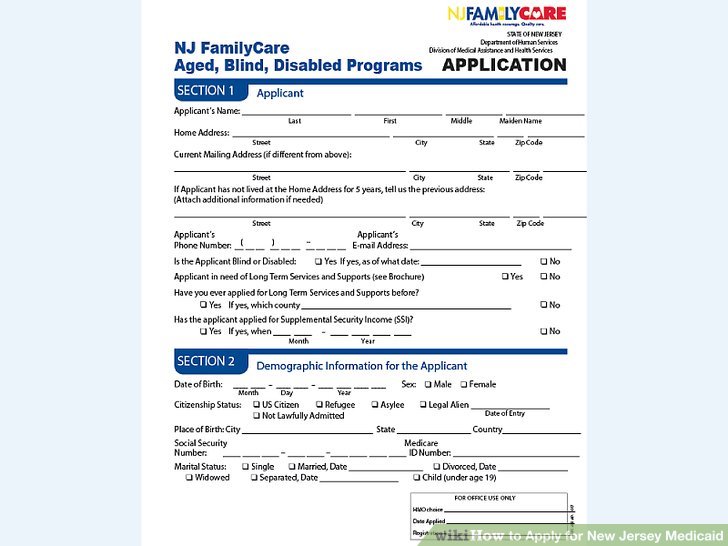
 

How to File for a Restraining Order

If you are a victim of domestic violence and need to file for a Restraining Order in New Jersey, you can call the police or go to your local police station if it is after business hours or you can go to your local county court during the day (usually between 8:30 am and 4:00 pm). In order to file for a Restraining Order at your local police station, there must have been a recent incident. If you tell them about an incident from several days ago, they will most likely tell you to go to your local family court during the day in order to file for the Restraining Order. The police will contact a judge at home who will determine whether or not to grant the temporary Restraining Order at that time. A hearing will be scheduled at Court within 10 days of the date that you file for the Restraining Order so that a judge can determine whether to grant a Final Restraining Order.

It is important to contact an attorney as soon as possible to discuss your case and prepare for a trial because the hearings are often scheduled quickly, sometimes after only a few days. You will need to prove that there was a recent incident of domestic violence, that there has been a prior history of domestic violence, and that you need the protection of a Restraining Order. Many factors go into proving these things to the Court, and it is best to have the advice and assistance of an experienced attorney. Please call my office at 856-745-8214 for an appointment.

Please remember that if you are a victim of domestic violence and are in immediate danger, call 911. If you need shelter or counseling, each county in New Jersey has a domestic violence agency that can provide you with assistance. The New Jersey Domestic Violence Hotline is 1-800-572-SAFE (7233), and it is staffed 24 hours a day, 7 days per week.


Spousal Support vs. Alimony

The terms spousal support and alimony are similar but do not have exactly the same meaning. Both terms refer to support paid from one spouse to the other spouse after separation, but spousal support refers to support paid while the spouses are living separately but still married with no divorce pending in Court. Alimony is support paid from one spouse to the other spouse after the divorce is final. You should note that alimony is not ordered by the Court in all divorces. It is a determination that depends on the particular facts and circumstances of each case. Another term, Alimony Pendente Lite (otherwise known as APL) is support paid by one spouse to the other spouse while the divorce is pending in Court.

There are specific factors that the Court must consider before ordering support to be paid from one spouse to the other spouse, and it is generally only ordered when one spouse earns significantly less than the other spouse. The legislature recently changed the law in New Jersey ending “Permanent Alimony” and instead allowing Limited Duration Alimony (alimony paid for a set amount of time) or Open Durational Alimony (alimony will be reviewed at retirement). Each situation is unique, and it is a good idea to discuss your specific situation with an attorney in order to find out whether you may be able to receive spousal support or alimony or whether you may be required to pay spousal support or alimony.